
Coralis Mollitor
Enriching Second Language Acquisition for Emergent Bilinguals
Applied Digital Learning 2024-25
New Enrollment:
Artificial Intelligence
A final draft research journal article about the use of AI as a tool for emergent bilingual acquisition of knowledge.


Coralis Mollitor
Department of Educational Leadership, Lamar University
EDLD 5317: Resources for Digital Learning
Dr. Glen Harrison
April 13, 2025
New Enrollment: Artificial Intelligence
Abstract
The increase of teaching demands and constant need to adapt to supply support for students, teachers across the nations are seeking for a tool that can lessen the demands placed by education. This article explores the use of artificial intelligence as a tool for teachers and students alike. Through the exploration of various research and personal application of technology, this article highlights the use of artificial intelligence in the classroom to support teachers and students. The research showcases the various usage of AI as a tool. Teachers and students can use it to provide feedback for writing, the creation of rubrics, and corrections of conventions. AI can be used for differentiation of curriculum/lessons, tailored activities, interaction amongst students, tutoring, and cultural infusion. The article covers limitations and concerns of AI technology, with an outlook of the future.
Keywords: artificial intelligence (AI), Texas Education Agency (TEA), State of Texas Assessment of Academic Readiness (STAAR), CoGrager, Co:Writer, ChatGPT, Gemini, second language acquisition, native language, emergent bilinguals, English Language Learners (ELL), Choice, Ownership, Voice, Authentic Learning (COVA), learning environments.
New Enrollment: Artificial Intelligence
Technology has expanded into the world of education. From personal devices to interactive whiteboards, education has gone digital; during this new era, the workload for educators in the classroom has increased. How can the education system bridge technology to minimize the time and excessiveness from the daily workload? How can students benefit from technology and use it to accelerate their learning? The research in this article covers the plethora of techniques artificial intelligence brings to assist teachers and students. The objective is to provide the bridge between AI and the classroom. Whether it be through feedback, or differentiation; this new tool has already been used in the classroom to alleviate teachers and encourage students. This research article covers findings from literature and case studies focusing on the impact of technology in the learning environment with a minor focus on emergent bilingual language acquisition.
Efficient, Effective, and Essential Feedback
Education has waves of realizations that shift the course of the classroom. In recent years, the emphasis on data and social emotional learning have molded education to focus on students as a whole, but an issue arose: What do we do with this data? Do we share it and with whom? Feedback is crucial in the development of all aspects of education, but it can be difficult to tailor feedback and give it back in a timely manner. Teachers understand the value of feedback and the necessity, since the increase in workload and the servicing of various students with different needs, teachers feel lost and discouraged.
Artificial Intelligence is a solution to the overwhelming pressure teachers have in providing feedback for learners. AI can be used to create rubrics, rate papers, check grammar, and list prompting questions that will improve student learning. In the academic year of 2022-2023, Texas Education Agency redesigned the Reading Language Arts state assessment, STAAR, to include constructed responses. This shift left teachers wondering: How will students be graded? What type of writing are students expected to produce? How do we prove to everyone, especially the students, improvement?
Teachers began creating rubrics; however, this scoring system has to change depending on the topic, genre, grade level, and criterias being evaluated. A generic rubric that does not provide clear and consistent expectations about language conventions, author’s craft, and genre characteristics is futile. Rubrics take time to create; now with AI, a skeleton of rubric is generated and teachers adjust on their lesson preference. Furthermore, AI rubrics can be adjusted by academic levels and language proficiency. For educators in bilingual education, rubrics are tailored to incorporate the use of native versus second language. Students can focus on the area of study without grasping at strings. Have a class with different grade levels? CoPilot, Gemini, or ChatGPT can help provide rubrics that state the4 expectations for each group of students. Allowing for students to craft purposeful responses, and for teachers to capitalize on feedback.
Once teachers have their rubrics and collection of essays, they can use AI technology to assist delivering precise feedback, grows and glows. AI summarizes and personalizes the feedback providing students with an understanding of their writing rather than a blanket cookie cut response (Topping et al., 2025). In classroom sizes of over thirty students, it is impossible to effectively reach each student and focus on their individual needs. Although with A.I technology, students can receive feedback from teachers as well as take ownership of their growth themselves.
In higher education, professors are exploring the versatility of AI technology in their own classrooms. In some instances students submitted their papers through an AI platform to review before submitting the final draft (McGuire et al., 2024). This is extremely beneficial to all teachers, it creates ownership in one's work. Students can have a personal tutor reviewing their papers to produce well throughout work. For those that serve emergent bilinguals, now there is a tool that provides feedback academically and in language proficiency. As an ELL learner myself, grammar is a weak point; I use programs like Gemini to review my work for errors and for vocabulary clarity. When using the tool, I receive an explanation of its suggestions and various examples to restructure a sentence. It has allowed me to feel more confident when expressing ideas. AI ensures that the glows and grows are possible regardless of the students level with an individualized response to their writing
Two programs I suggest are CoGrader and Gemini. Both programs use rubrics designed by the teachers to grade student work. They will provide a report of areas students succeed and are not there yet. CoGrader has other features that Gemini does not, since its use is specializing in grading. Those features include the ability for teachers to add to the notes, the feedback can be more concise or stricker, and it can translate the feedback to a different language. A major difference in the feedback provided was the AI’s interpretation of the rubric. For example, I had both programs rate the same essay with the same rubric. CoGrader misunderstood the point system. CoGrader has a more approachable delivery. It broke down each category from the rubric and gave suggestions to improve each one. Meanwhile, Gemini’s feedback was directed towards the teacher. It also needed clarification of the grade level of the author. Both are efficient, but have different audiences. Inevertibally, Artificial Intelligence as a means of feedback will lead to differentiation and individualized learning experiences.

A Differentiated Design
For students to exceed beyond the classroom setting, teachers need to allow students to learn in an environment that promotes choice, ownership, voice, and authenticity, otherwise known as COVA. Teachers are provided with a curriculum, an expectation from their district on what needs to be taught and what resources are accepted for the acquisition of knowledge; nevertheless, curriculums are guides of the overarching lessons and do not consider student where they are at, the pace they learn, or the strides required for student achievement. When teachers plan their lessons, they consider language, culture, behavior, academic history, disabilities, and giftedness. Since no two students are the same, the essential deliberate calculations by teachers are needed.
Artificial Intelligence is a tool to permit teachers to expand students’ knowledge in ways that reach them. AI can provide tutoring, accommodations, real-life lessons, and interest. For instance, the tool Co:Write is a Google Chrome extension that assists students in writing. The tool has speech-to-text, word prediction, text-to-speech, and topic word banks. Students that need spelling checklists and ELLs benefit from this program. It takes away the stress of guessing and searching for the spelling of words to permit individuals to learn content with ease. It has multiple languages and can even translate the spoken word to a different language when typing. During my time as a teacher for emergent bilinguals, I have come across several students whose writing is illegible, by using Co:Writer students can express their thoughts and feelings without the obstruction of spelling.
From grammar and vocabulary support to box chatting to tutoring, digital tools have heard teachers plead for more resources to support emergent bilinguals. Research has taken flight when considering AI technology for second language acquisition. In a study by Üstünbas (2024), students used ChatGPT to practice conversations in English. Even though more research and improvement is needed with time, the study yielded positive results for the students. Students felt more confident and enjoyed the process of learning with AI. Another form that AI is an essential tool for ELLs is the creative art tools. The ability to create visuals of idioms and figurative language helps learners acquire culture along with language.
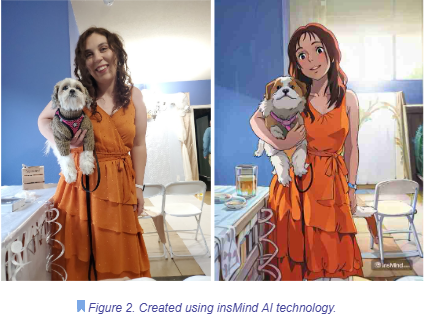
Emergent bilinguals have the opportunity to gain two cultures when moving to a new country. Unfortunately, not all schools nor districts are prepared to support newcomers with their native culture and language. AI can bridge those connections for teachers and students. When providing a prompt for students, teachers can ask Co:Pilot, Perplexity, or their tool of choice to alter the question to fit various backgrounds. All in all, artificial intelligence is an easy step to improve teacher work-life and student education; when used appropriately.
Reimagining Classrooms with AI in Mind
The ideology of constructivism believes that individuals bring their own background knowledge (Brau, 2021). Whether it be through experience, beliefs, or values, learners have a fountain of information at their disposal to use when learning. Therefore when creating a learning environment that encompasses all learners with the use of technology, it is important to acknowledge their individuality. For emergent bilinguals, there are multiple background factors to consider: culture and academics.
Emergent bilingual students' culture will be bridge in a functional learning environment. Students will bring their native language and cultural beliefs to the acquisition of their second language and create a new adaptation to their culture. AI technology as a tool can bridge the two cultures, and languages, by providing emergent bilinguals the opportunity to practice using either language as preferred and by transferring concepts. Students can produce work as they see fit with the feedback attribute of AI; meanwhile, gain practice their second language using AI chatbots.
Emergent bilinguals have a constant battle with education; either they are labeled with a learning disability or their language prevents the diagnosis of a disability. Bilingual students in Texas are tested for English proficiency and tested academically in English. In fact, only 3-5th grade state assessments are available in Spanish; to add to the inequality, most districts do not attempt to offer Spanish in math assessments. Therefore emergent bilinguals are at a disadvantage academically. AI can be a solution! Programs like Co:Writer, Snap&Read, chatbots, Quill, and more provide feedback and accommodations for learners to use. They can provide text-to-speech (Snap&Read), paraphrase information (Quill), and speech-to-text (Co:Writer). These tools allow students to work in their own language but produce work in the desired second tongue. In a constructivist focused learning environment, AI would permit students to form their own learning in any language. AI will permit the passion and interest of students to develop in their own personalized way while considering their cultural background.
Current Obstructions in the Creation of Learning
Due to Artificial Intelligence recently taking a place on the global stage there are some concerns when using its abilities. The major concerns: teachers are not prepared, substitution and limiting of human interactions, overreliances of technology, and the guidelines needed to use technology ethically (Julien, 2024; McGuire et al., 2024). Teachers' professional developments are in need of redesign; too many are a one-and-done lesson, not a plan of mastery. Therefore teachers become overwhelmed when time and guidance are not offered continuously. How can teachers prepare students for digital citizenship, when they themselves do not understand the tools nor its implications. A professional development curricula can be developed to help teachers learn the use of AI in the classroom The first step is to create a calendar that paces the learning process for teachers. This may be a year long process or more. When considering the pacing, we need to have coaching meetings, research time, and modeling opportunities. The more relevant resources provided for teachers, more confidence will be gained.
The fear of overreliance and loss of human interactions are important to address when the social emotional well being of children in the classroom is still being developed. Children learn based on their experiences and through facilitation. To combat overreliance, educators need to use consistency, patience, and tailored activities-lessons to model students perspective of AI. After teachers provide the activity or lesson, they need to allow students to brainstorm and connect with the topic of assignment. Once the students have an opinion and an idea, teachers can present the use of AI. It will be presented as a support tool not the creator of work. By including moments for students to communicate their ideas and claim ownership, the reliance on AI as the maker is gone. This is why it is important as teachers to learn when tech-tools need to be used and incorporate them accordingly.
It is a tedious ground we are walking on when contemplating the use of AI. We do not want to completely eradicate innovation and creativity, we want learners to benefit from it and not use it as a crutch. Teachers need to focus on using it in the classroom as a complimentary item. This is where the philosophy of learning environments is crucial. The environment sets the pace of the tool in the classroom. The learning environment creates the ethical guidelines needed when using AI. Combining the learning environment with constructivism, educators can create an ethical expectations.. Learners will know to use AI as a tool of support in their creations. To create a universal ethical guideline, educators should share their success and learning moments when implementing AI; the first hand knowledge creates a relatable understanding of AI in the classroom.
Conclusion
Artificial intelligence is new and has only been briefly explored compared to its potential. Even in the news today disputes over the regulation of AI platforms are being discussed. It is important to be deliberate and precise when using any tool. Technology, AI is no exception, can promote learning and powerful environments; it can facilitate learning to allow for innovation. It can bring inclusivity and diversity. It can even build trust through feedback and support. It is important to note that there will always be concerns. AI is a tool. There are times when it is appropriate to use and there are regulations. It is important to stay conscious of any drawbacks and adapt accordingly. We are scratching the surface on how AI can be used in the classroom; on how it can help emergent bilinguals, create learning environments, and facilitate teachers.
To promote the correct use of Artificial Intelligence, we need volunteers in education to innovate ways it can be used. We need pioneers to combat the cons and dive into the pros of AI technology. This is the time to push boundaries and explore its potential.
References
Baidoo-Anu, D & Owusu Ansah, L. (2023, December 31). Education in the era of generative artificial intelligence (AI): Understanding the potential benefits of ChatGPT in promoting teaching and learning. Journal of AI 7, (1). 52-62. file:///C:/Users/18173/Downloads/ssrn_id4572394_code5681117.pdf
Brau, B. (2021, May 28). Constructivism. EdTech. https://edtechbooks.org/studentguide/constructivism
Julien, G. (2024, May 29). How artificial intelligence (AI) impacts inclusive education. Educational Research and Reviews, 19 (6), 95-103. https://files.eric.ed.gov/fulltext/EJ1434316.pdf
McGuire, A, Qureshi, W & Saad, Mariam. (2024) A constructivist model for leveraging GenAI tools for individualized, peer-stimulated feedback on student writing. International Journal of Technology in Education, 7 (2), 326-352. https://doi.org/10.46328/ijte.639
Thomas, D. & Seely Brown, J. (2011). A new culture of learning: Cultivating the imagination for a world of constant change.
Topping, K.J, Gehringer, E, Khosravi, H, Gudipati, S, Jadhav, K & Susarla, S. (2025). Enhancing peer assessment with artificial intelligence. International Journal of Educational Technology in Higher Education, 22 (3). https://doi.org/10.1186/s41239-024-00501-1
Üstünbas, U. (2024). Hey, GPT, can we have a chat?: A case study on EFL learners’ AI speaking practice. International Journal of Modern Education Studies, 8 (1), 91-107. https://eric.ed.gov/?id=EJ1436000